
The one-and-done problem nobody puts on the P&L
It's a widely repeated industry observation that around two out of three first-time diners never make a second visit — and most owners, checking their own numbers for the first time, find they're not the exception. The loss never appears on a report because nothing visibly happened: the guests ate, paid, smiled, and dissolved back into a city full of restaurants.
Read that as inventory: every month your marketing, your location and your word of mouth manufacture a stock of first-timers — and two-thirds of the stock evaporates. Cutting that evaporation is worth more than any acquisition campaign, because these people already found you, already liked you enough to walk in, and already know the way. The rest of this playbook is about catching them before they dissolve.
The frequency ladder: your real growth lever
Repeat business isn't binary — it's a ladder, and revenue lives in the rungs. At a 90-SAR average check (casual family dining), here's what each rung is worth per household per year:
| Rung | Visit rhythm | Yearly value |
|---|---|---|
| Tried you once | 1 visit | 90 SAR |
| Occasional | Once a quarter | 360 SAR |
| Monthly | Once a month | 1,080 SAR |
| Regular | Twice a month | 2,160 SAR |
| Weekly ritual | Every weekend | 4,680 SAR |
The strategic insight: you don't need anyone to jump the ladder — you need many households to climb one rung. Fifty quarterly households becoming monthly ones is worth 36,000 SAR a year, with zero new customers. Every tactic below is a rung-climbing tool, and your loyalty program's reward ladder is the scoreboard that makes the climb visible to the climber.
The first 72 hours: turn the visit into a channel
Two things must happen before the first-time guest leaves, and one shortly after:
- Before the bill: earn the right to reach them. The QR on the check presenter — "this bill could have been earning you points" — converts a one-off transaction into a communications channel. No channel, no playbook: everything else in this article assumes you can reach the guest again.
- At the door: plant the return hook. The cheapest one is verbal and specific: "الويكند الجاي عندنا طبق جديد — جربوه" beats "thanks for coming" because it names a reason and a time to return.
- Within 72 hours: one warm touch. A welcome message — thank you, here's your card, here's what people order next. No discount, no push to book. You're not selling; you're refusing to be forgotten while the memory is still warm.
Days 7–30: from nice memory to standing habit
The second visit is the whole ballgame — a guest who returns once within a month has beaten the base rate and is statistically on the path to regularhood. Between day 7 and day 30, two quiet levers do the work:
The visible balance. A member who left visit one with 90 points on a wallet card owns unfinished business. Unlike a promo code (an expense you push at them), a balance is theirs — abandoning it costs them something. This asymmetry is why points out-retain discounts at equal cost.
The day-30 line in the sand. If no second visit has happened by day 30, one automatic message goes out — presence, not panic: "Your 90 points are waiting — the lamb ouzi is back on the weekend menu." Send it once. A guest recovered here rejoins the ladder at the occasional rung; a guest ignored here was already gone, and you've lost nothing by asking.
Turning delivery orders into dining regulars
Your delivery-platform customers are the strangest asset you own: they buy your food regularly and you don't know who they are. The platform holds the relationship, charges commonly 15–30% for the privilege, and shows your competitors to your own customers at reorder time.
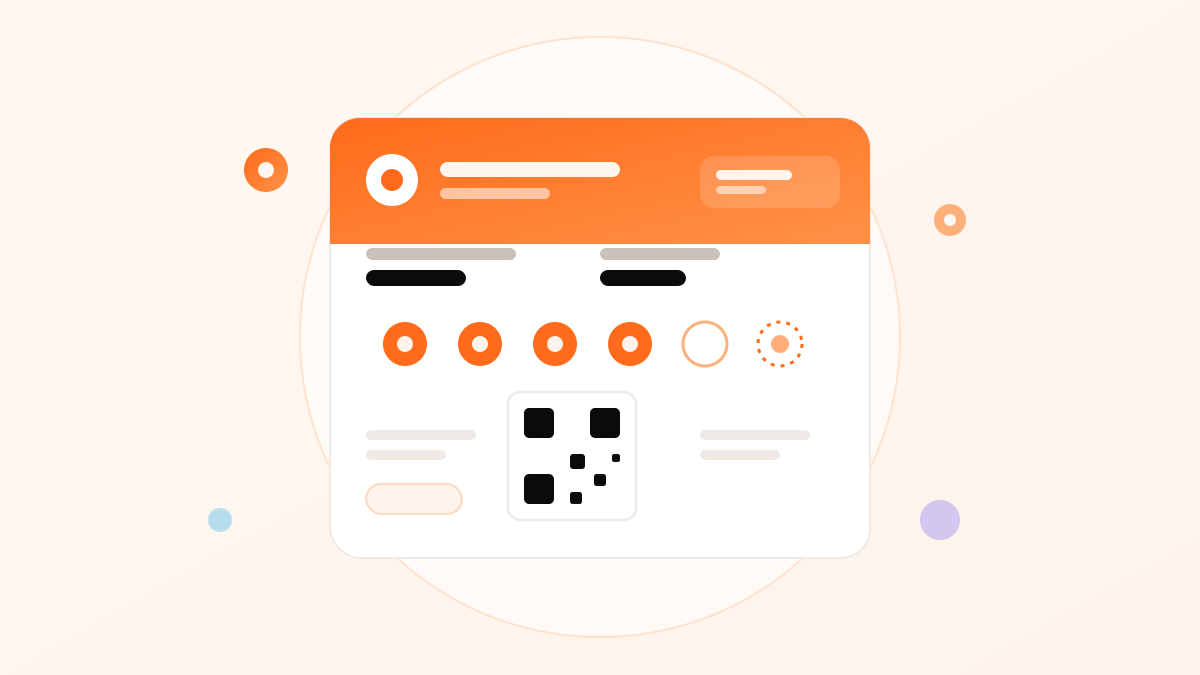
The conversion machine is a printed card in every bag: scan, add the wallet card, your next pickup or dine-in order earns points. Note what this does — it doesn't fight the platform for the delivery order (a fight you lose on convenience); it invites the household to add a direct layer to the relationship: the Thursday dine-in, the Friday pickup on the way home. Each converted order swaps a commission-taxed transaction for a full-margin one, and the commission math says one converted household pays for the entire program many times over.
Winning the weekend family decision
In Saudi Arabia the highest-value repeat decision of the week happens Thursday afternoon in a family group chat: "وين نتعشى بكرة؟" You want to be in that conversation without being in the room, and you have two proxies:
- The host's balance. The family member who pays — and therefore holds the points — has a private thumb on the scale. "عندي نقاط هناك، نكمل عليها" is your program speaking in your absence. This is why concentrating points on the payer, rather than splitting them, is the right design for this market.
- The Thursday nudge. If you send broadcast messages at all, Thursday 3–6pm is the slot that matters: weekend menu, family platter, the dish that photographs well. One good Thursday message a month outworks four random ones — the decision it intercepts is already scheduled.
Niqati runs the wallet card and the timing plays out of the box; you bring the food.
See the featuresThe review → return loop
Owners treat Google Maps reviews as acquisition — stars for strangers. But the loop has a retention side that's mostly free to run. A guest who writes a review has done something psychologically important: they've publicly affiliated with your restaurant. A genuine owner reply — specific, warm, unbothered by the four-star nitpick — completes a conversation that measurably raises the odds they return, and every future reader sees a restaurant that answers. Fold it into the weekly rhythm: reviews answered every week, criticisms thanked, the fixable thing actually fixed. Regulars are watching how you treat feedback long before they write any.
Measure it in 60-day windows
Restaurants breathe slower than coffee shops, so borrow the café's discipline but stretch the window: what share of this month's guests return within 60 days? Split it members versus non-members — the gap is your system's measurable effect. Watch three supporting numbers: second-visit rate for new guests (the 72-hour and day-30 plays), bag-card conversions (the delivery play), and host balances above the first reward rung (the weekend play). All four should live on one dashboard you check weekly — the metrics section of our loyalty guide defines each one precisely.
Frequently asked questions
Should a win-back message include a discount?
Start without one. Drifting is usually logistics, not price — a warm reminder with the points balance often suffices and protects positioning. If you escalate, offer a dish, not a percentage.
How soon after a first visit should I follow up?
Once within 72 hours, lightly — thanks and the card, no promotion. The heavier touch waits for day 30 if no second visit happened.
Do Google Maps reviews really affect repeat business?
Yes, twice: they recruit strangers, and replying to them retains writers — a reviewer with a genuine owner reply returns at a visibly higher rate. Work the reply queue weekly.
The food is great but people don't return — why?
Quality gets you considered, not remembered. In a city of good options, the restaurants that win repeats stay present after the meal — a card in the wallet, a growing balance, a well-timed nudge. Without that, delighted customers simply forget you in the noise.
Published · Last updated · Checks and commission figures are illustrative — run the ladder table with your own average check.