
Why the stamp card wins where a barber is concerned
Loyalty advice has spent a decade telling businesses to abandon stamps for points. For a barbershop, that advice is simply wrong, and the reason is the ticket. A fade costs roughly what a fade cost last time; there's no 50-riyal visit sitting next to a 400-riyal one the way there is in a salon or restaurant. When every purchase is about the same size, points add arithmetic nobody needs — a stamp already tracks visits perfectly. It's faster at the chair, it's understood in a glance, and it matches how a man actually experiences the shop: another cut, another stamp, closer to a free one.
Points only start to make sense if grooming-product sales — pomades, beard oils, kits — become a real slice of revenue and baskets diverge. Until then, the stamp card isn't a downgrade; it's the correct instrument.
The free-cut math: what "buy 5, get the 6th free" really costs
Barbers overestimate the cost of a free cut because they price it at the ticket. But a haircut is almost pure labour and chair-time, not goods — the marginal cost of one more cut in a slot you'd otherwise have idle is close to zero. Work it through on a 45-SAR cut: across a full five-stamp cycle the client pays 225 SAR (five cuts) and receives a sixth that costs you a barber's time you often had spare, not 45 SAR of stock.
Now set that against the habit it locks. A client on a monthly cut who becomes a committed regular is worth roughly 540 SAR a year; nudging even a handful of drifting occasional clients onto that rhythm dwarfs the handful of free cuts you hand out. The free cut isn't a cost line — it's the cheapest retention you can buy.
Why five stamps, not the usual ten
The default punch card has ten boxes. On a monthly cut cycle, ten cuts is nearly a year to the first reward — far too long to feel worth chasing, and long enough that most cards die in a drawer. Niqati's card defaults to five stamps — buy five, the sixth free — deliberately. You can set the goal anywhere from three to nine, but five is the one to beat. The first reward lands in four to five months, close enough that the client can see it coming and adjusts his loyalty to close the gap. Research on progress toward a goal is consistent here: the nearer a reward feels, the harder people push to reach it, which is exactly why a short card outperforms a long one.
Why paper fails the one business that suits it
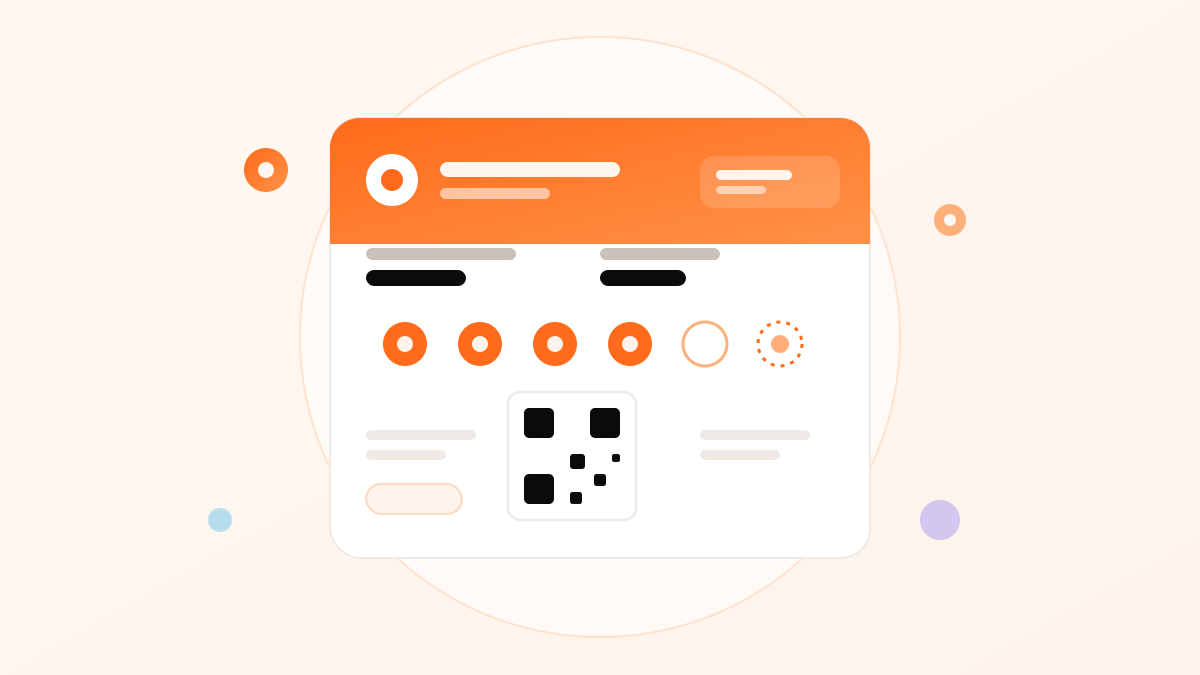
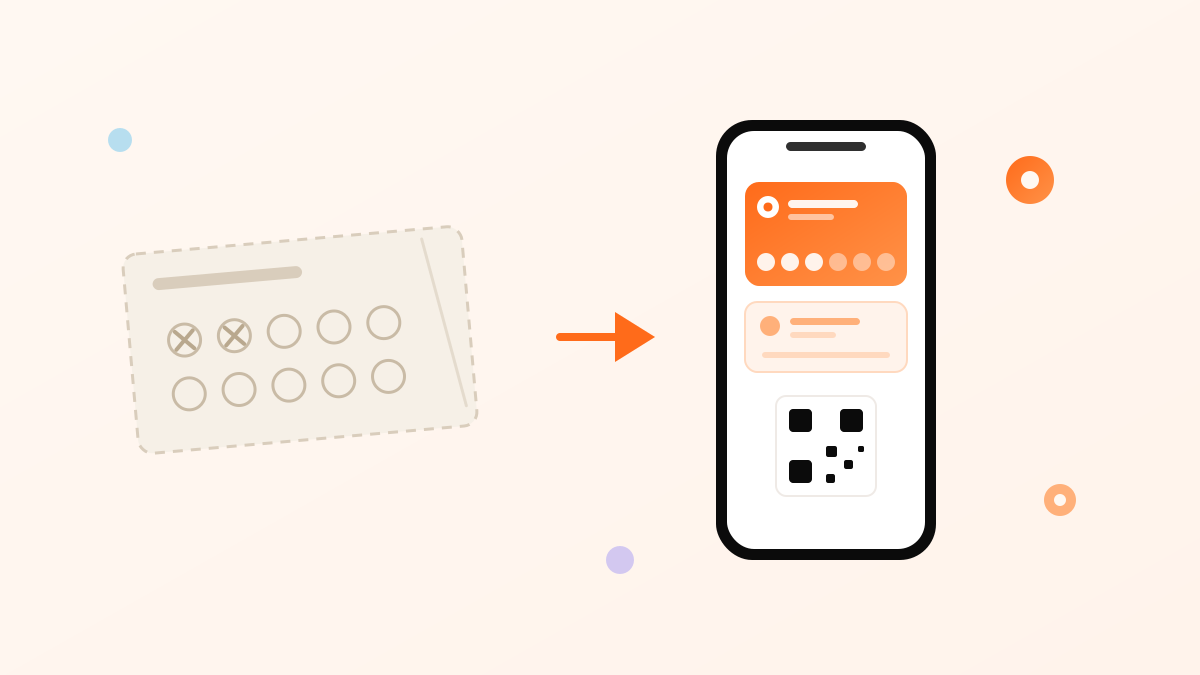
The barber's paper punch card is a good idea undone by its medium. It lives in a wallet the client cleared out, or it went through the wash, or he left it at home the one day he came in — so the stamp is skipped and the count quietly resets to zero in the client's mind. A wallet-based card removes every failure: it's added once with a QR scan, sits in Apple Wallet or Google Wallet beside his bank cards, and can't be lost. And it does the one thing paper never could — it can message him. When he's one cut from a free one, or when his usual three weeks are up, the card can say so on his lock screen. That single capability, covered in the digital loyalty cards guide, is what turns a passive stamp card into an active retention tool.
What to reward — and what not to
- The free cut is the reward. It's what the client wants, it costs you spare chair-time, and it's dead simple to understand. Don't overthink it.
- Skip percentage discounts. "10% off" on a 45-SAR cut is a few riyals nobody feels, and it teaches clients your price is soft. A whole free cut feels generous; a small discount feels like haggling.
- Consider a service upgrade as a second-tier reward. A free beard trim or hot-towel add-on on a later milestone rewards your heaviest regulars with something that, again, costs mostly time.
- Put the rules on the back of the card. Wallet passes have a back face — hours, branches, Instagram, the one-line rule. It saves your barbers explaining and makes the card feel complete.
Launching in a week
- Day 1 — build and test. Create the five-stamp card, add it to your own phone, stamp yourself, redeem once. Fix anything that isn't instant.
- Day 2 — place the QR. A small stand at the mirror station and one at the till. The QR is your sign-up form; put it where a waiting client's eyes rest.
- Day 3 — brief the barbers. One line, said at every checkout for two weeks: "scan this — your sixth cut's on us." Consistency is the whole game.
- Day 4–7 — watch two numbers. Sign-ups per 100 cuts, and repeat scans per sign-up. If both climb, the habit is forming.
Barbershops are one of eleven trades we have costed separately, but the platform question is the same everywhere. If you are weighing vendors rather than mechanics, our comparison of the best loyalty program in Saudi Arabia sets out the five approaches and what each actually costs in riyals.
Frequently asked questions
Should a barbershop use stamps or points?
Stamps. A barbershop's ticket barely varies, so a buy-5-get-the-6th-free card is fairer, quicker at the chair and clearer than points. Only switch to points if grooming-product sales grow into a large, variable share of revenue.
How much does a free cut actually cost the shop?
Far less than the menu price. A haircut is mostly labour and chair-time, so a free cut in an otherwise-idle slot costs you a barber's time, not stock. Set that against a year of a retained regular's cuts and it's the cheapest retention available.
Can one card work across multiple branches?
Yes. A digital stamp card syncs across every branch instantly and any barber can scan it, so a client keeps one count wherever he goes and you see which branch converts walk-ins fastest.
What if a client forgets to show the card?
With a wallet card there's nothing to forget — it's in the same phone wallet he pays from, and staff can look him up if needed. That's the core advantage over paper, which only works if the client happens to be carrying it.
Reviewed by the Niqati Team on 16 July 2026. Prices are illustrative — rebuild the free-cut math around your own ticket and chair costs.